
Overview: Xeriscaping works extremely well in many Colorado Springs yards, but it is not simply a matter of replacing grass with rock and calling it a day. Soil conditions, drainage, sun exposure, slope, wind, and how you actually want to use the yard all play a major role in whether a xeriscape design will feel functional, attractive, and easy to maintain long term. A thoughtful drought resistant landscape design in Colorado Springs should reduce frustration and water use, not create a decorative gravel parking lot for weeds and regret.
Why Xeriscaping Has Become So Popular in Colorado Springs
Colorado Springs homeowners are dealing with a combination of realities that make traditional high-water-use landscaping harder to maintain than it used to be.
Those realities include:
• Dry climate conditions
• Water conservation concerns
• Intense summer sun
• Rising maintenance expectations
• Challenging soil conditions
• Deer and rabbit pressure
• Large temperature swings
For many homeowners, xeriscaping offers an opportunity to create a yard that feels more sustainable, easier to maintain, and better suited to Colorado’s climate.
But successful xeriscaping is not about eliminating plants or covering everything in decorative gravel. The best xeriscape landscape designs still feel alive, layered, comfortable, and connected to how people actually use the property.
What Xeriscaping Actually Means
One of the biggest misconceptions about xeriscaping is assuming it means a barren yard with rocks and a few struggling shrubs scattered around like survivors in a post-apocalyptic movie.
True xeriscaping focuses on:
• Water-wise plant selection
• Efficient irrigation planning
• Soil improvement
• Mulch and moisture retention
• Functional outdoor design
• Climate-appropriate landscaping
• Lower-maintenance plant communities
Good xeriscaping still includes color, texture, seasonal interest, and outdoor usability. It simply approaches landscaping with Colorado conditions in mind instead of fighting against them constantly.
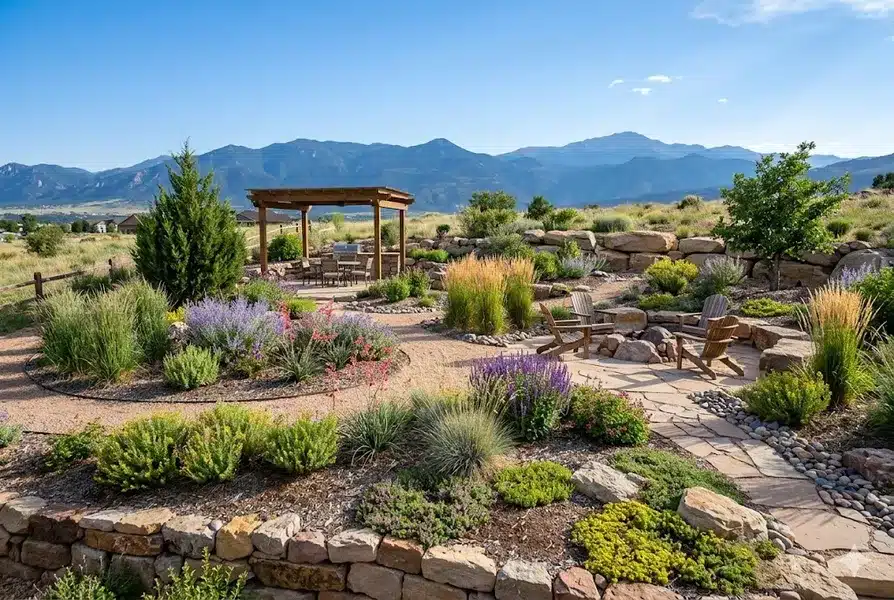
Xeriscaping Is Not “Zero Landscaping”
A properly designed xeriscape often includes:
• Ornamental grasses
• Drought-tolerant perennials
• Native or adaptive shrubs
• Accent trees
• Groundcovers
• Pollinator-friendly plants
• Functional outdoor living spaces
The goal is creating a landscape that works with the environment while still feeling visually inviting and usable.
Why Soil Conditions Matter So Much
Colorado Springs soil conditions vary dramatically from property to property. Some yards contain dense clay soils that hold water longer than expected, while others drain quickly and dry out almost immediately.
That matters because xeriscape plants respond differently depending on:
• Drainage conditions
• Soil compaction
• Sun exposure
• Wind exposure
• Elevation changes
• Existing irrigation systems
A plant that thrives in one Colorado Springs neighborhood may struggle only a few miles away if the soil and drainage conditions change significantly.
Clay Soil Challenges
Many Colorado Springs properties contain heavy clay soil. Clay tends to compact easily and drain slowly, which can create stress for certain drought-tolerant plants if water lingers too long around the roots.
Common clay soil issues include:
• Compaction
• Poor drainage
• Root stress
• Winter freeze expansion
• Surface cracking during dry periods
Good xeriscape planning often includes improving soil structure and adjusting plant selection based on how the yard actually behaves during different seasons.
Why Drainage Matters More Than People Expect
Many homeowners assume drought-tolerant plants can survive anywhere simply because they require less water overall. But poor drainage can still damage xeriscape plants quickly, especially during freeze-thaw cycles in winter.
Healthy xeriscaping depends just as much on proper drainage and soil balance as it does on reduced irrigation.
Rocky and Fast-Draining Soil
Other Colorado Springs properties contain rocky soil conditions that drain extremely fast. While that may sound ideal for xeriscaping, excessively dry soil can create its own challenges during hot summer months.
Fast-draining sites often require:
• Better mulch strategies
• Wind protection
• Drought-adapted plant groupings
• Efficient irrigation zoning
• Careful plant spacing
The goal is reducing water waste while still supporting healthy long-term growth.
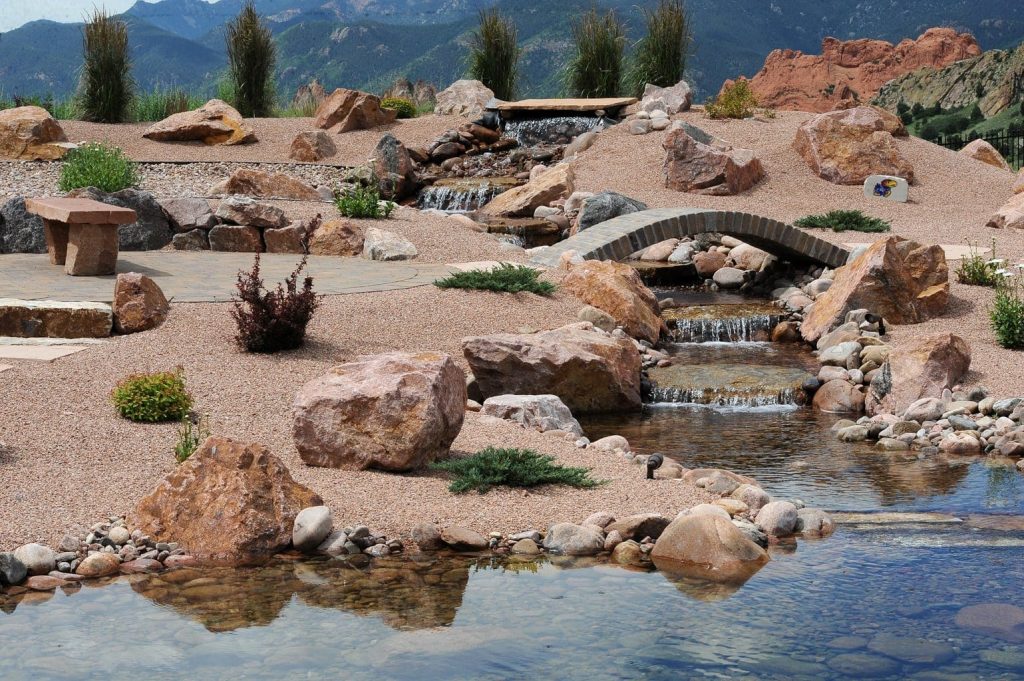
What Homeowners Often Get Wrong About Xeriscaping
One of the most common mistakes is treating xeriscaping as a shortcut instead of a thoughtful landscape strategy.
A poorly planned xeriscape can create:
• Excessive heat reflection
• Weed problems
• Sparse visual design
• Drainage issues
• Uncomfortable outdoor spaces
• Long-term plant stress
Throwing down landscape fabric and decorative gravel without proper planning rarely produces a landscape people genuinely enjoy spending time in.
Too Much Rock, Not Enough Design
Some xeriscape projects become overwhelmingly hard and dry visually because they rely too heavily on gravel and not enough layered planting.
The most successful xeriscape landscapes usually combine:
• Soft plant textures
• Structural shrubs
• Accent features
• Mulch zones
• Functional hardscapes
• Natural transitions
The yard should still feel welcoming and comfortable, not like a roadside median behind a tire shop.
Ignoring How the Yard Is Used
Some homeowners focus so heavily on reducing maintenance that they accidentally remove functionality and comfort from the yard entirely.
A good xeriscape should still support:
• Entertaining
• Relaxation
• Curb appeal
• Outdoor seating
• Walkability
• Seasonal interest
The best xeriscaping improves usability while reducing unnecessary maintenance demands.
How Xeriscaping Can Improve Outdoor Living
Well-designed xeriscaping often works especially well when combined with outdoor living features like patios, walkways, retaining walls, and outdoor lighting.
Xeriscape landscapes can help:
• Reduce water usage
• Lower maintenance demands
• Improve curb appeal
• Create year-round texture and color
• Improve erosion control
• Support pollinators and wildlife
• Create more cohesive outdoor spaces
In many Colorado Springs properties, xeriscaping also helps solve difficult slope and drainage issues more naturally than traditional turf-heavy landscapes.
Creating More Comfortable Outdoor Spaces
Strategic xeriscape design can also improve comfort by helping manage:
• Heat reflection
• Wind exposure
• Drainage flow
• Shade opportunities
• Traffic circulation
That is why the best xeriscape plans are usually tied closely to the overall outdoor living layout instead of treated as a separate landscaping decision.
Jake’s Designs’ Approach
At Jake’s Designs, xeriscape projects begin with understanding how the property functions and how homeowners want to use the space long term. The goal is not simply reducing water use. It is creating a landscape that feels intentional, attractive, durable, and easier to maintain in Colorado Springs conditions.
For homeowners exploring water-wise landscape planning, the Xeriscaping Services page provides additional design inspiration and planning guidance.
Planning Around the Property
Every xeriscape design should respond to the specific conditions of the yard itself.
That includes evaluating:
• Soil conditions
• Sun and shade patterns
• Drainage flow
• Wind exposure
• Existing grades
• Outdoor living goals
Good xeriscaping is highly site-specific. The best results come from designing around the property instead of forcing a generic plant list into every yard.
Designing for Colorado Conditions
Colorado Springs landscapes experience intense UV exposure, rapid temperature swings, dry air, and difficult seasonal weather patterns. Xeriscape planning needs to account for all of those factors.
That affects decisions involving:
• Plant selection
• Irrigation strategy
• Mulch materials
• Drainage management
• Hardscape integration
The goal is creating landscapes that remain attractive and functional through Colorado’s changing seasons.
Choosing Plants That Actually Belong Here
Some plants naturally adapt much better to Colorado Springs conditions than others. Native and climate-adapted species often require less maintenance while performing more consistently long term.
Plant selection may focus on:
• Drought tolerance
• Deer resistance
• Seasonal durability
• Pollinator support
• Long-term maintenance needs
• Visual texture and layering
A successful xeriscape should still feel dynamic and visually interesting throughout the year.
Building Landscapes That Age Well
Good xeriscaping should become more attractive and easier to maintain over time, not harder.
That often involves:
• Improving soil structure
• Creating efficient irrigation zones
• Layering plant communities thoughtfully
• Managing drainage intentionally
• Integrating outdoor living spaces cohesively
The best xeriscape landscapes feel mature, balanced, and connected to the property instead of looking sparse or unfinished.
Trends Shaping Xeriscaping Right Now
Softer, More Natural Xeriscape Design
Many homeowners are moving away from harsh rock-heavy xeriscapes toward more layered, natural-looking landscapes. Drought-tolerant grasses, flowering perennials, and native shrubs help create softer and more inviting outdoor spaces.
The result often feels more relaxed and residential while still reducing water demands significantly.
Pollinator-Friendly Landscaping
More xeriscape designs now include plants that support bees, butterflies, and beneficial pollinators. Homeowners increasingly want landscapes that feel environmentally supportive while still looking polished and intentional.
Integrated Outdoor Living
Xeriscaping is increasingly connected with patios, lighting, retaining walls, and outdoor gathering areas. Homeowners want outdoor spaces that balance lower maintenance with comfort and usability.
That integrated approach usually creates more cohesive and visually balanced properties overall.
Smarter Irrigation Planning
Modern xeriscape systems often use targeted irrigation zoning instead of broad spray systems designed for turf grass. Smarter watering strategies help reduce waste while supporting healthier long-term plant growth.
Next Step
If you are considering xeriscaping in Colorado Springs, the first step is understanding how your specific yard conditions affect what will actually perform well long term.
A design consultation can help clarify:
• Soil and drainage conditions
• Plant selection options
• Irrigation needs
• Outdoor living opportunities
• Maintenance expectations
• Long-term landscape planning
The best xeriscape landscapes are not simply low-water yards. They are thoughtfully designed outdoor environments built specifically for Colorado conditions and real everyday use.
Summary
Xeriscaping can work extremely well in Colorado Springs when the design responds properly to soil conditions, drainage, sun exposure, and how the yard is actually used. The most successful xeriscape projects combine water-wise planning, layered planting, functional outdoor living design, and long-term durability to create landscapes that feel both practical and welcoming.
Click to schedule a landscape design consultation with a local Colorado Springs landscape design expert.
Frequently Asked Questions on this Topic
Is xeriscaping really lower maintenance than traditional landscaping?
In most Colorado Springs properties, xeriscaping can significantly reduce maintenance compared to traditional high-water turf landscapes. However, low maintenance does not mean no maintenance. Xeriscape landscapes still require pruning, seasonal cleanup, irrigation monitoring, and occasional plant care. The difference is that a properly designed xeriscape usually reduces mowing, watering demands, and long-term upkeep frustration substantially.
You might like this report from CSU: The benefits of xeriscaping: A beginner’s guide to drought-tolerant landscaping
Does xeriscaping mean getting rid of all grass?
Not necessarily. Many successful xeriscape designs in the Pikes Peak region still include limited turf areas where they make sense functionally or visually. The goal is usually reducing unnecessary high-water lawn space rather than eliminating grass entirely. In Colorado Springs, many homeowners choose to keep smaller lawn areas for pets, children, or outdoor gathering spaces while converting the rest of the yard to more water-wise landscaping.
What plants work best for xeriscaping in Colorado Springs?
The best xeriscape plants depend heavily on soil conditions, sun exposure, drainage, and wind patterns specific to the property. Native grasses, drought-tolerant perennials, adaptive shrubs, and climate-appropriate trees often perform well in Colorado Springs conditions. Plant selection should also account for deer resistance, seasonal durability, and long-term maintenance expectations. The most successful xeriscapes combine multiple plant textures and layers for a more natural appearance.
Can xeriscaping help with drainage and erosion problems?
Yes. Thoughtful xeriscape planning can improve erosion control and help manage difficult drainage patterns more effectively than traditional turf-heavy landscapes in many situations. Strategic plant roots, mulch zones, grading improvements, and water-wise planting areas can all help stabilize soil and reduce runoff. In Colorado Springs, xeriscaping is often combined with retaining walls, drainage systems, and hardscape planning to improve overall yard performance.
Will a xeriscape yard still feel inviting and attractive?
A well-designed xeriscape should absolutely feel attractive, layered, and welcoming. Modern xeriscaping has moved far beyond the old stereotype of gravel and sparse shrubs. The best xeriscape landscapes include color, texture, seasonal interest, lighting, outdoor living areas, and thoughtfully layered planting design. In many Colorado Springs neighborhoods, xeriscaping now creates some of the most visually appealing and functional outdoor environments.