
Summary: Planning an outdoor fireplace for Colorado Springs winter use begins with thoughtful landscape design, not just selecting a fireplace. By planning for seating, wind protection, lighting, drainage, and year-round functionality, homeowners can create an inviting outdoor living space that’s comfortable well beyond the summer months. A comprehensive design helps ensure your fireplace becomes part of a backyard you’ll enjoy in every season.
Outdoor Living Doesn’t Have to End When the Temperature Drops
A plan for an outdoor fireplace in Colorado Springs for winter use starts long before the first cold front arrives. While many homeowners think of patios and outdoor living spaces as summer destinations, a thoughtfully designed outdoor fireplace can extend the season well into fall and winter, making your backyard a place to gather even as temperatures drop.
Colorado Springs offers more than 240 days of sunshine each year, and winter afternoons are often bright, calm, and surprisingly comfortable. With the right design, an outdoor fireplace provides warmth, creates a natural gathering place, and encourages homeowners to enjoy their backyard during months when it might otherwise sit unused.
The key isn’t simply adding a fireplace—it’s designing the surrounding space so it remains inviting throughout the colder seasons.
Start by Thinking About How You’ll Use the Space
Every successful outdoor living project begins with the same question:
How do you want to spend time in your backyard?
For some homeowners, that means hosting friends around a crackling fire on crisp autumn evenings. Others picture quiet mornings with a cup of coffee while watching the sunrise over the Front Range. Families may envision roasting marshmallows after dinner or gathering outdoors during the holidays.
Those answers influence far more than the size or style of the fireplace.
They determine where seating should be located, how people move through the space, whether additional wind protection is needed, and how the fireplace connects with patios, walkways, and other outdoor features.
When the design reflects how you actually live, the fireplace becomes part of your daily routine rather than an occasional feature used only a few times each year.
Choose the Right Location
Where an outdoor fire feature is placed can have just as much impact as the fireplace itself.
A fireplace tucked into an exposed corner of the yard may struggle against Colorado’s winter winds, while one positioned too close to the house can make the patio feel cramped. The best location balances warmth, comfort, safety, and views.
During the design process, it’s helpful to consider:
- Prevailing winter winds
- Afternoon sun exposure
- Views of Pikes Peak or the surrounding landscape
- Proximity to the home’s indoor living spaces
- Traffic flow between the house, patio, and backyard
- Space for comfortable seating around the fire
Rather than treating the fireplace as a standalone feature, professional landscape designers position it as a focal point within the larger outdoor living environment.
Think Beyond the Fireplace
A fireplace alone doesn’t create an inviting outdoor room.
Comfortable seating, thoughtful lighting, attractive landscaping, and well-designed walkways all contribute to whether the space feels welcoming on a chilly evening.
For example, low retaining walls can double as additional seating during larger gatherings. Evergreen plantings help provide year-round structure while softening the surrounding hardscape. Layered landscape lighting improves safety after sunset and creates a warm, inviting atmosphere throughout the winter months.
These supporting elements often make the difference between an outdoor fireplace that’s admired from inside the house and one that becomes a favorite place to spend time.
Read More: How to Build a Backyard Entertainment Area That Withstands Wind and Heavy Use
Design for Every Season, Not Just Winter
Although the fireplace may become the centerpiece during colder months, it should also feel like a natural part of the backyard throughout the rest of the year.
In spring and summer, the same space can serve as an outdoor conversation area, a backdrop for entertaining, or a quiet place to relax after work. By integrating the fireplace with patios, planting beds, and gathering areas, homeowners create an outdoor living space that remains functional in every season.
Rather than designing specifically for winter, the goal is to create a backyard that adapts naturally as Colorado’s seasons change.
Design for Comfort on Colorado’s Coldest Days
A fireplace may provide warmth, but thoughtful design determines whether an outdoor space remains comfortable throughout the winter.
Colorado Springs homeowners know that winter weather can change quickly. A sunny afternoon may feel pleasant enough for lunch outdoors, while the same patio can become noticeably cooler once the sun drops behind the mountains. Wind, shade, and seating placement all influence how inviting the space feels.
Designing with these conditions in mind helps homeowners enjoy their outdoor living areas long after summer has ended.
Gas or Wood-Burning? Consider How You’ll Use It
One of the first decisions homeowners face is choosing between a gas fireplace and a traditional wood-burning fireplace. Each offers advantages, and the best choice often depends on how the space will be used.
A gas fireplace provides instant warmth with little to no effort and requires very little maintenance. It’s an excellent option for homeowners who want to enjoy their outdoor space frequently without having to gather firewood or clean ash.
Wood-burning fireplaces create the familiar crackle, aroma, and ambiance many families enjoy. For homeowners who love spending entire evenings by the fire or entertaining during the holidays, that traditional experience can be part of the appeal.
Rather than asking which option is better, consider which one best supports your lifestyle. The goal is to choose a fireplace you’ll actually use—not one that simply looks impressive.
Arrange Seating Around Conversation
One of the most common design mistakes is treating an outdoor fireplace like a television, with every chair lined up in a single row facing the fire.
Instead, the fireplace should become the center of conversation.
Grouping chairs in a semicircle or conversational arrangement encourages guests to interact while still enjoying the warmth of the fire. Built-in seating walls can increase capacity without making the patio feel crowded, while movable furniture offers flexibility for gatherings of different sizes.
Comfortable circulation is just as important. Guests should be able to move easily between the fireplace, dining area, and outdoor kitchen without weaving around furniture or interrupting conversations.
When these relationships are considered during the design process, the backyard feels effortless to use.
Use Landscaping to Improve Winter Comfort
Plants contribute more than seasonal color.
Thoughtfully placed evergreen trees, ornamental grasses, shrubs, and decorative walls can soften prevailing winter winds while creating a greater sense of privacy. These landscape features also add texture and visual interest during months when many gardens appear dormant.
Instead of relying on a single large windbreak, designers often layer planting beds to provide protection while preserving mountain views and allowing winter sunlight to reach gathering spaces.
The result is an outdoor environment that feels more comfortable without appearing enclosed.
Select Materials That Look Beautiful Year After Year
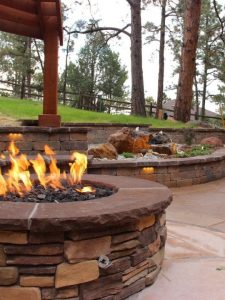
Colorado’s climate rewards durable materials.
Outdoor fireplaces and surrounding patios are exposed to intense ultraviolet light, snow, freezing temperatures, and frequent freeze-thaw cycles. Choosing materials designed for those conditions helps preserve both appearance and performance over time.
Natural stone remains a popular choice because it complements the Front Range landscape while offering long-term durability. High-quality concrete pavers, weather-resistant masonry, and premium metal accents can also provide lasting beauty when installed correctly.
Material selection should also complement the home’s architecture. A contemporary home may call for clean lines and cool gray tones, while a mountain-inspired residence may benefit from textured stone and warmer colors that blend naturally with the surrounding landscape.
Layer Lighting for Winter Evenings
Because daylight hours are shorter during the winter, landscape lighting design becomes an even more important part of the overall design.
Rather than relying on a single overhead fixture, layered lighting creates a space that’s both functional and inviting.
Soft pathway lighting improves safety, step lighting defines elevation changes, and subtle accent lighting highlights stonework, trees, or architectural features without competing with the glow of the fireplace.
When lighting is planned as part of the original landscape design, the backyard remains welcoming well after sunset while maintaining the relaxed atmosphere homeowners want for evening gatherings.
Think Beyond the Fireplace
An outdoor fireplace is often the feature that captures attention, but it’s rarely the reason homeowners continue using their backyard year after year.
The surrounding environment matters just as much.
A nearby dining area makes outdoor meals more enjoyable during cooler weather. An outdoor kitchen allows meals to be prepared without constantly moving between the house and patio. Comfortable walkways encourage guests to move naturally through the space, while layered landscaping creates beauty in every season.
Instead of viewing the fireplace as the destination, think of it as one element within a thoughtfully designed outdoor living environment.
That perspective allows every feature to support the others, creating a backyard that’s enjoyable year-round rather than only during special occasions.
You Might Like: Backyard Kitchen Layout Ideas for Sloped Yards in Colorado Springs
A Backyard You’ll Enjoy Long After Summer Ends
One of the biggest misconceptions about outdoor living is that it’s only meant to be enjoyed during warm weather.
In reality, many Colorado Springs homeowners find that fall and winter are among their favorite times to spend outside. Cool evenings, clear skies, and snow-covered mountain views create an atmosphere that’s difficult to replicate indoors. An outdoor fireplace provides a comfortable place to enjoy it.
The goal isn’t to spend every winter evening outside. It’s to create a backyard that’s ready whenever the opportunity presents itself—whether that’s a sunny afternoon in January, a crisp October evening with friends, or a quiet night by the fire after the first snowfall.
When the space is thoughtfully designed, homeowners naturally find themselves using it far more often than they expected.
Design for the Way Your Family Lives
No two families use their outdoor spaces the same way.
Some homeowners enjoy entertaining large groups several times each year. Others prefer a quiet retreat where they can unwind after work or enjoy a weekend morning with a cup of coffee. Families with children may want flexible spaces that accommodate everything from birthday parties to roasting marshmallows on a winter evening.
These lifestyle preferences should shape the overall design just as much as the fireplace itself.
For some homes, that may mean placing the fireplace near an outdoor dining area to create a seamless transition after dinner. Others may benefit from a more secluded seating area that feels tucked away from the rest of the yard. Popular trends rarely determine the best solution—it’s determined by how the homeowners want to live.
That’s why the design process begins with listening before drawing.
You Might Like: Backyard Kitchen Layout Ideas for Sloped Yards in Colorado Springs
A Long-Term Vision Creates Better Results
Outdoor living spaces don’t always come together in a single construction season.
A homeowner may begin with a patio and fireplace today, then add landscape lighting the following year, and later add an outdoor kitchen or pergola as their needs change.
There’s nothing wrong with building in phases—as long as every phase supports the same long-term vision.
Imagine a family who decides to install a fireplace to make better use of their backyard during the winter. During the design process, they also mention plans for an outdoor kitchen and additional seating for extended-family gatherings.
Rather than treating those as separate projects, the designer develops a master plan that anticipates future improvements. Utility routes are planned in advance, lighting is designed to accommodate future expansion, and gathering spaces are arranged so each new feature fits naturally within the landscape.
A few years later, when the outdoor kitchen is added, it feels like the backyard was always intended to look that way.
That’s the advantage of planning first.
More Than a Fireplace—A Backyard Designed for Every Season
An outdoor fireplace is rarely the feature homeowners remember most.
Instead, they remember conversations that lasted longer than expected, holiday gatherings with family, evenings spent watching the snow fall, and quiet moments that became part of everyday life.
The fireplace simply creates the setting.
Thoughtful landscape design creates everything around it.
When patios, planting beds, lighting, walkways, seating areas, and gathering spaces are designed together, the backyard becomes more than a collection of individual features. It becomes an extension of the home—a comfortable, inviting, and enjoyable place year-round.
Enjoy Your Outdoor Fireplace Throughout Colorado Springs Winters
Designing an outdoor fireplace for Colorado Springs winter use is about much more than adding warmth to your backyard. It’s about creating an outdoor living space that’s designed to be enjoyed in every season.
By considering sun exposure, wind patterns, seating arrangements, lighting, materials, and future improvements from the beginning, homeowners can create a backyard that feels just as inviting on a cool winter afternoon as it does during the height of summer.
Whether you’re planning a dedicated gathering space or a complete backyard transformation, starting with a comprehensive landscape design helps ensure every feature works together to support your lifestyle for years to come.
If you’re ready to explore what’s possible for your property, Jake’s Designs can help you develop a plan that brings beauty, comfort, and functionality together in one cohesive outdoor living environment.
Click to schedule a landscape design consultation with a local Colorado Springs landscape design expert.
Frequently Asked Questions on this Topic
Is an outdoor fireplace practical in Colorado Springs?
Yes. Sunny days are one of Colorado Springs’ defining characteristics, making outdoor living possible well beyond the summer months. When thoughtfully designed with wind, sun exposure, and comfortable seating in mind, an outdoor fireplace can become a favorite gathering place during much of the fall and winter.
Should I choose a gas or wood-burning outdoor fireplace?
The best choice depends on how you plan to use the space. Gas fireplaces offer convenience and quick operation, while wood-burning fireplaces provide a traditional fire experience many homeowners enjoy. During the design process, it’s helpful to consider your lifestyle, maintenance preferences, and how often you expect to use the fireplace.
Where should an outdoor fireplace be located?
Placement should consider more than available space. Wind direction, sunlight, views, traffic flow, and the relationship between the fireplace, patio, and home all influence how comfortable the space will be. A well-positioned fireplace becomes a natural gathering place rather than an isolated backyard feature.
Can I add an outdoor fireplace as part of a larger landscape project?
Absolutely. Many homeowners incorporate a fireplace into a broader outdoor living plan that may also include patios, outdoor kitchens, pergolas, retaining walls, or landscape lighting. Planning these features together often creates a more cohesive design and makes future improvements easier.