
Summary: Creating an outdoor design that can withstand drought and temperature swings in Colorado Springs begins with planning for the region’s unique climate instead of fighting it. By choosing climate-appropriate plants, durable materials, efficient drainage, and a thoughtful landscape design, homeowners can create outdoor living spaces that remain beautiful, functional, and resilient through Colorado’s changing seasons.
Colorado Doesn’t Have Difficult Landscapes—It Has Different Ones
An outdoor design that can withstand Colorado Springs’ drought and temperature swings begins with understanding the local environment rather than trying to overcome it.
Colorado Springs presents challenges that many parts of the country simply don’t experience. High altitude increases UV exposure, low humidity dries soils faster, clay soils expand and contract with changing moisture levels, and dramatic temperature swings can add stress to plants, hardscape materials, and irrigation systems.
Those conditions don’t prevent homeowners from creating beautiful outdoor living spaces.
They require thoughtful planning.
Colorado’s climate itself doesn’t cause many landscape problems—designs that weren’t developed with Colorado in mind do.
When patios, planting beds, drainage, irrigation, and material selections work together, homeowners can enjoy outdoor spaces that remain attractive, functional, and durable through every season.
What Homeowners Often Get Wrong
Many homeowners in the Pikes Peak region assume that designing for drought means giving up lush landscaping or settling for a yard filled with decorative rock.
Neither is true.
Colorado-friendly landscapes can include colorful perennials, ornamental grasses, flowering shrubs, shade trees, and inviting outdoor living spaces. The difference is that every element is selected with the local climate in mind.
Another common mistake is focusing on individual features rather than the landscape as a whole.
A beautiful paver or flagstone patio won’t perform at its best if you don’t consider drainage. Premium pavers can’t prevent problems caused by poor grading. Even healthy plants can struggle if they’re placed in the wrong location or grouped with species that require significantly different amounts of water.
The most successful landscapes work as complete systems, not a collection of separate projects.
You Might Like: Backyard Landscape Design Ideas for Colorado Springs That Bring Your Outdoor Space Together
Colorado Springs Requires a Different Design Approach
Colorado weather rarely follows a predictable pattern.
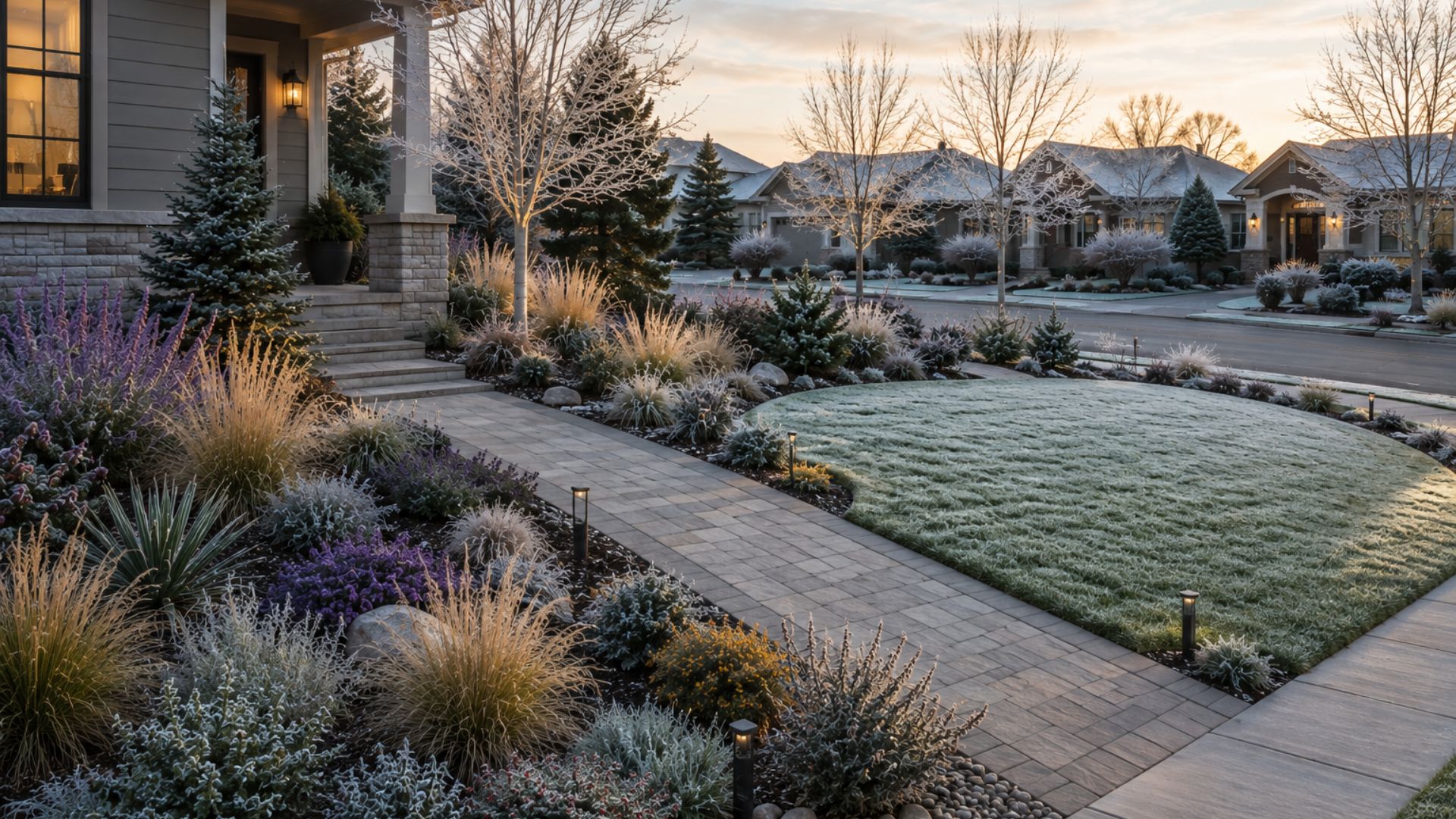
A warm spring afternoon may be followed by a hard freeze overnight. Summer afternoons often bring intense sunshine, followed by brief but powerful thunderstorms. Winter temperatures can fluctuate dramatically within the same week, creating repeated freeze-thaw cycles that affect both plants and hardscape materials.
These conditions influence nearly every design decision.
Landscape drainage becomes just as important as aesthetics. Plant selection requires more than choosing what looks attractive at the nursery. Select hardscape materials not only for appearance but also for long-term durability in Colorado’s climate.
Taking these realities into account creates an outdoor design that can withstand drought and temperature swings common in Colorado Springs and keep performing long after installation.
Build for Long-Term Performance
The best landscapes aren’t designed to look their best only on installation day.
They’re designed to continue improving as the years go by.
That means selecting plants adapted to Colorado Springs, choosing durable materials, planning for effective drainage, and creating outdoor living spaces that remain functional throughout every season.
Maintenance will always be part of owning a landscape.
Thoughtful planning simply helps reduce unnecessary repairs, replacement costs, and ongoing frustration.
Every Successful Landscape Begins with a Plan
Before choosing plants, selecting pavers, or deciding where to place an outdoor kitchen, it’s important to understand the property itself.
- How does the sun move across the yard?
- Where does water naturally collect after a storm?
- Which areas receive the strongest afternoon winds?
- What views should be highlighted—or screened?
The answers to those questions influence every design decision that follows.
Rather than forcing the property into a predetermined layout, a comprehensive landscape plan works with the site’s natural characteristics to create an outdoor space that’s both beautiful and resilient.
Good design doesn’t fight Colorado Springs drought and temperature swings – it embraces them.
Choose Materials That Are Built for Colorado
Colorado’s climate is demanding on outdoor living spaces.
Intense sunlight, hail, snow, ice, and repeated freeze-thaw cycles place stress on patios, retaining walls, walkways, and other hardscape features. Materials that perform well in milder climates may weather more quickly or require additional maintenance here.
That’s why hardscaping selections should take into account more than a pleasing appearance alone.
High-quality pavers, natural stone, properly constructed retaining walls, weather-resistant finishes, and corrosion-resistant hardware can all help a landscape perform better over time.
Choosing durable materials upfront often reduces future repairs and protects your overall investment.
Select Plants That Naturally Thrive Here
Low-maintenance landscaping often begins with choosing plants well suited to Colorado Springs’ growing conditions.
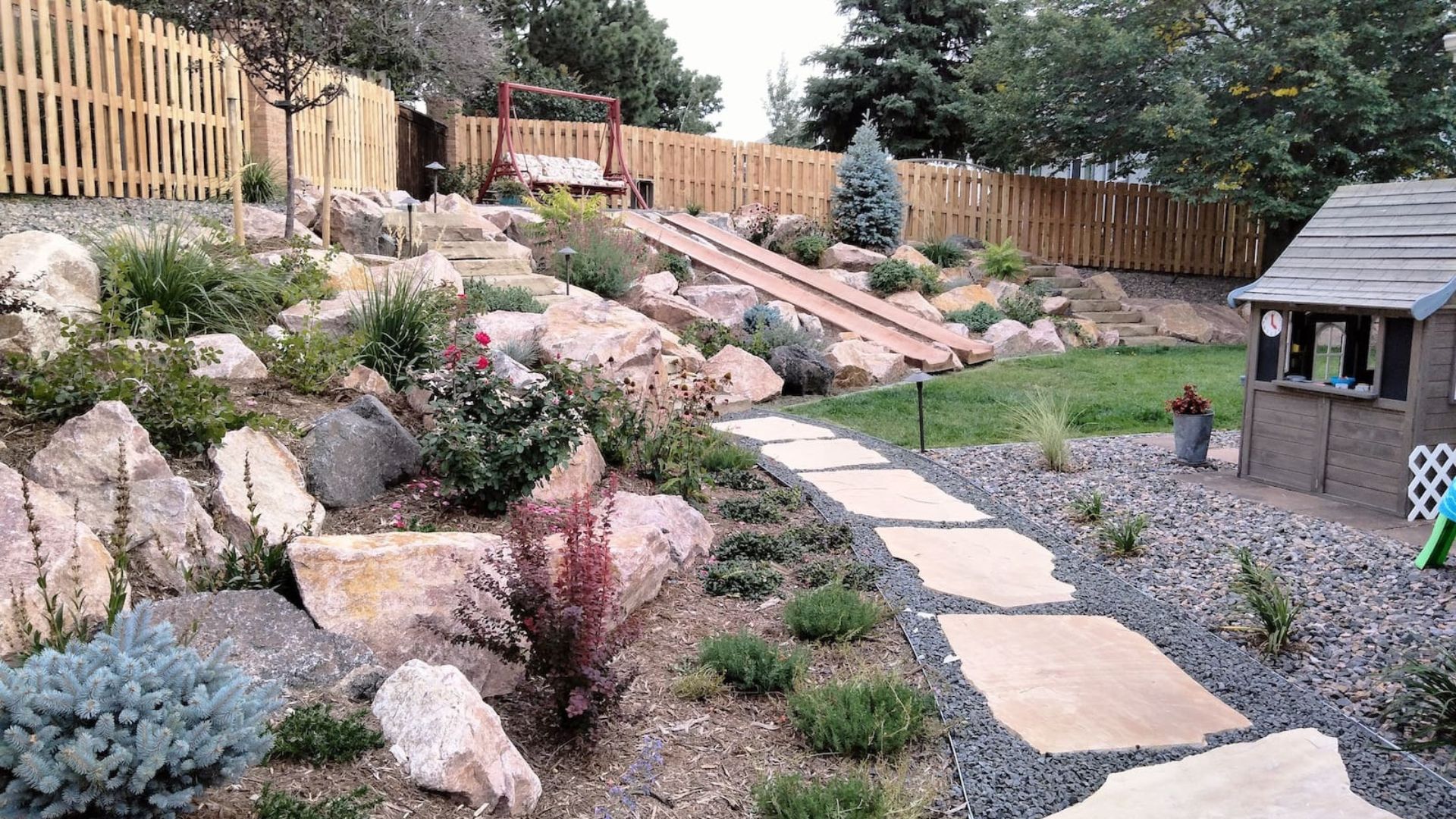
Drought-tolerant perennials, ornamental grasses, evergreen shrubs, and carefully selected shade trees often establish more successfully because they’re adapted to lower water availability and changing temperatures.
That doesn’t mean every landscape has to look the same.
By combining plants with varying heights, textures, bloom times, and seasonal interest, homeowners can enjoy landscapes that stay colorful and visually appealing year-round while using water more efficiently.
Healthy plants begin with good design—not simply more irrigation.
Keep Reading: How to Create a Low-Maintenance Yard in Colorado Springs Without Sacrificing Curb Appeal
Water Efficiently, Not Excessively
Many homeowners assume that watering more frequently is the best way to protect their landscape during the common drought and temperature swings we experience in Colorado Springs.
In reality, thoughtful irrigation design is usually more effective than simply using more water.
Grouping plants with similar watering needs, incorporating mulch to reduce evaporation, improving soil health, and installing efficient irrigation systems all help deliver water where it’s needed most.
The goal isn’t to eliminate irrigation. Rather, it is to make every gallon of water count.
Build in Phases Without Losing the Vision
Creating a resilient outdoor living space doesn’t have to happen all at once.
Many homeowners begin with foundational improvements such as grading, drainage, patios, or retaining walls before adding planting beds, landscape lighting, outdoor kitchens, pergolas, or fire features over time.
Starting with a comprehensive landscape plan lets each phase build on the last, avoiding expensive redesigns later.
Whether your project takes one season or several years, a master plan helps every improvement contribute to one cohesive outdoor environment.
Prepare for Colorado’s Changing Seasons
If you live in Colorado for any length of time, you know that every season brings new challenges.
Summer heat increases water demands. Heavy rains test drainage systems. Winter freeze-thaw cycles affect hardscape materials, while spring storms can expose weaknesses in grading and erosion control.
A landscape that’s designed with these conditions in mind is better equipped to adapt year after year.
Planning for seasonal change from the start often prevents costly repairs and helps outdoor living spaces stay attractive, no matter the drought or temperature swings we may experience at the foot of Pikes Peak.
Related: How to Design an Outdoor Fireplace You’ll Actually Use During Colorado Springs Winters
Why Local Design Experience Makes a Difference
Landscape design principles may be universal, but every region has its own challenges.
Colorado Springs combines high altitude, intense sunlight, clay soils, limited rainfall, strong winds, and significant temperature swings in ways that influence nearly every aspect of an outdoor project.
At Jake’s Designs, we understand local conditions and can recommend plants, materials, drainage solutions, and construction techniques proven to perform well here.
That regional knowledge helps homeowners avoid common mistakes while creating landscapes designed specifically for Colorado—not copied from somewhere else.
Design for the Landscape You’ll Enjoy Years from Now
The best landscapes aren’t measured by how they look the week they’re installed.
They’re measured by how well they continue to perform through years of Colorado sunshine, dry summers, heavy spring storms, freezing winters, and everything in between.
Plants mature. Trees provide more shade. Outdoor living spaces become part of your family’s routine. A landscape planned for long-term performance keeps improving as it grows.
That’s the advantage of designing for the future instead of focusing only on installation-day conditions.
Every Improvement Should Build on the Last
One of the greatest benefits of a comprehensive landscape plan is that every project supports the next.
A retaining wall can create level planting areas for future gardens.
Proper drainage protects patios and walkways from unnecessary wear.
Shade trees improve comfort around outdoor kitchens and gathering spaces.
Landscape lighting enhances every feature while extending backyard enjoyment after sunset.
Instead of treating each improvement as a separate project, a master plan allows every investment to contribute to one cohesive outdoor environment.
Landscapes Should Thrive—Not Just Survive
Colorado homeowners often hear that the state’s climate is simply hard on landscaping.
The reality is more encouraging.
When plants match local growing conditions, drainage is planned correctly, durable materials are selected, and outdoor spaces are designed with Colorado’s drought and temperature swings in mind, landscapes become remarkably resilient.
Rather than constantly replacing plants, repairing hardscape, or making reactive changes, homeowners can spend more time enjoying an outdoor space that’s designed to perform through every season.
That’s the difference thoughtful planning makes.
A Flexible Plan Makes Future Improvements Easier
Very few homeowners complete their dream landscape in a single season.
Budgets evolve.
Families grow.
Outdoor priorities change.
A comprehensive design plan makes it easy to expand your landscape over time without sacrificing consistency.
Whether your next project is a pergola, fire feature, outdoor kitchen, additional planting beds, or expanded landscape lighting, every improvement can feel like part of the original vision from the start.
Create an Outdoor Design That Withstands Colorado Springs’ Climate
An outdoor design that can withstand drought and temperature swings in Colorado Springs begins with respecting the environment rather than resisting it.
By selecting plants that thrive locally, choosing materials built for Colorado’s climate, planning for drainage and irrigation, and designing outdoor living spaces around how your family uses the property, you create a landscape prepared for both today’s weather and tomorrow’s challenges.
The result isn’t simply a landscape that looks beautiful – it’s one that’s designed to last.
If you’re ready to create an outdoor living space that’s as resilient as it is beautiful, a professional landscape design consultation from Jake’s Designs is the ideal place to begin. Together, we can develop a plan that reflects your property, your lifestyle, and the realities of living in Colorado Springs.
Click to schedule a landscape design consultation with a local Colorado Springs landscape design expert.
Frequently Asked Questions on this Topic
How do you design a landscape that can handle Colorado Springs' climate?
A successful landscape begins with understanding the local environment. Selecting climate-appropriate plants, using durable hardscape materials, planning for drainage, and incorporating efficient irrigation all help create an outdoor space that performs well through Colorado’s changing seasons.
What materials last the longest in Colorado landscapes?
Natural stone, high-quality concrete pavers, engineered retaining wall systems, weather-resistant outdoor structures, and corrosion-resistant hardware are all excellent options when properly installed. The best choice depends on your property’s conditions and your overall design goals.
Can a drought-tolerant landscape still look colorful?
Absolutely. Many drought-tolerant perennials, ornamental grasses, flowering shrubs, and carefully selected trees provide color, texture, and seasonal interest while requiring less water once established. A thoughtful planting plan creates beauty without unnecessary water use.
Should I build my landscape all at once?
Not necessarily. Many homeowners complete their projects in phases. Starting with a comprehensive landscape design helps future additions integrate seamlessly while protecting your long-term investment.
Why is local landscape design experience so important?
Colorado Springs presents unique challenges, including high altitude, clay soils, intense sunlight, freeze-thaw cycles, hail, and limited rainfall. Designers who understand these local conditions can recommend solutions that improve durability, reduce maintenance, and create outdoor spaces that are built specifically for Colorado. Call today to schedule your free consultation with the experts at Jake’s Designs.