
Summary: Retaining wall drainage protects your landscape from water buildup, shifting soil, erosion, and premature structural damage. Before building a retaining wall in Colorado Springs, you need to understand how water moves through your property and where it will go after construction. Planning drainage alongside your wall design helps create a stronger, more attractive, and longer-lasting outdoor space.
How Water Pressure Can Affect Retaining Wall Drainage
One of the biggest threats to a retaining wall is hydrostatic pressure. When rainwater or irrigation water saturates the soil behind your wall, it can create additional pressure against the structure. As that pressure increases, the wall may shift, lean, crack, or separate at its joints.
Water can also affect the soil supporting your retaining wall. When soil becomes saturated, its strength and behavior may change. Repeated wetting and drying can contribute to movement. At the same time, flowing water can carry away soil near poorly protected areas, making proper grading, foundation preparation, and drainage important parts of a successful retaining wall project.
Related: When Do You Actually Need a Retaining Wall in Colorado Springs?
Why Local Properties Need Special Attention
Colorado Springs presents several environmental conditions that make drainage planning particularly important. Many properties contain sloping terrain, variable soil conditions, and areas where runoff naturally concentrates during storms. Our region also experiences dramatic temperature changes that can introduce additional challenges when moisture becomes trapped in building materials.
Sudden Storms and Heavy Runoff
Even with a dry landscape, a strong summer thunderstorm can send significant amounts of water downhill. If your retaining wall interrupts an existing drainage path, water may collect behind it or begin flowing toward nearby patios and walkways.
What initially seems like a simple landscaping improvement can unintentionally redirect runoff into areas that previously stayed dry. Evaluating these natural drainage patterns before construction helps determine where water should be collected, redirected, or safely discharged.
Clay Soil and Freeze-Thaw Conditions
Some areas contain clay-rich soils that respond noticeably to changing moisture levels. As these soils absorb water, they can expand, while drying conditions cause them to shrink.
During colder months, moisture near the surface can also freeze and thaw, contributing to movement in susceptible soils. A retaining wall designed with appropriate drainage and site preparation is better positioned to handle these changing conditions.
Read Also: Retaining Wall Ideas for Sloped Yards in Colorado Springs That Add Beauty and Function
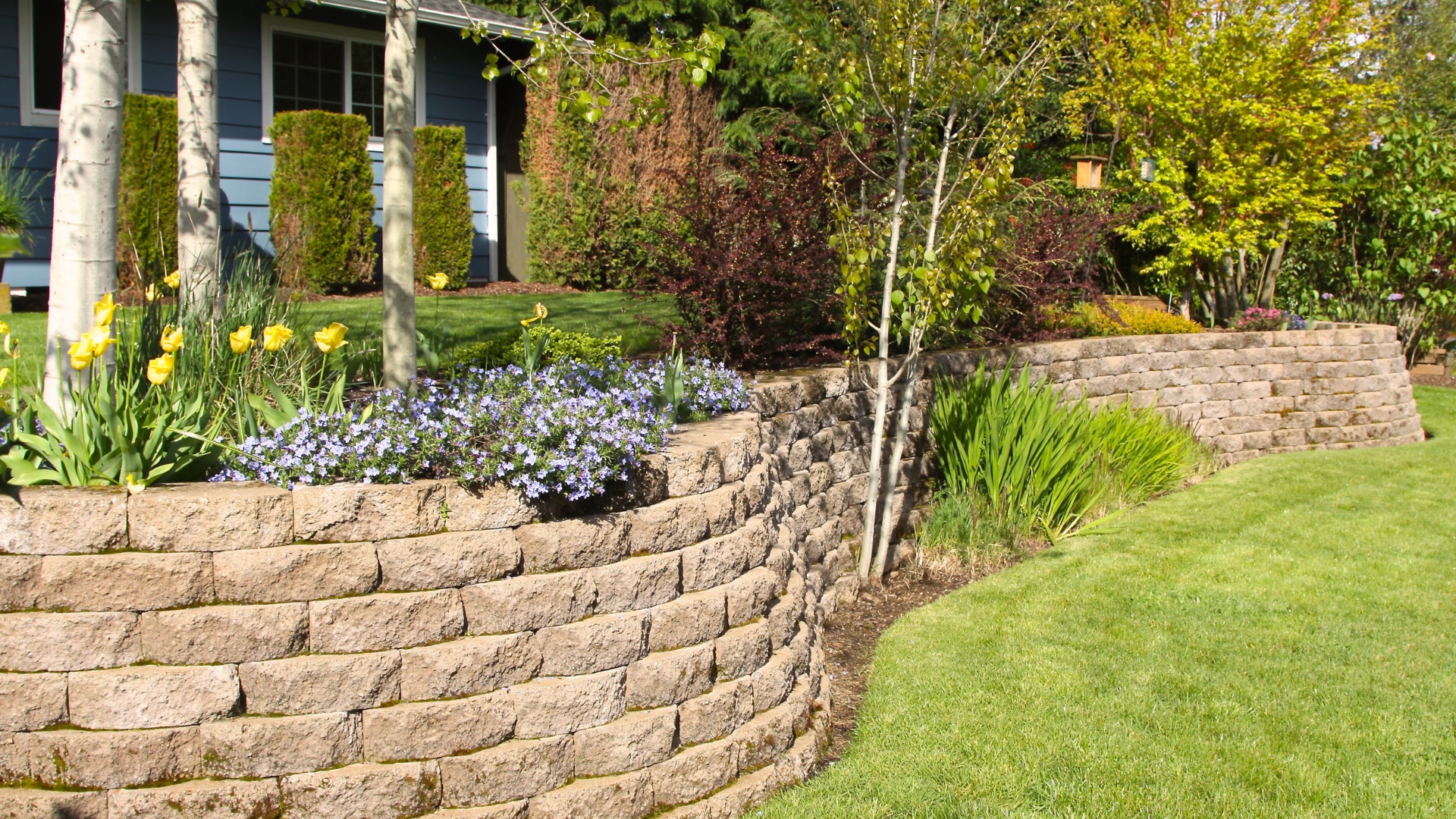
What Goes Into an Effective Retaining Wall Drainage System?
Effective retaining wall drainage involves a few components:
Drainage Aggregate and Perforated Pipe
Free-draining crushed stone is commonly installed behind retaining walls to help water move toward a designated point. Depending on the wall design, a properly positioned perforated drainpipe may collect that water and direct it toward a suitable outlet. Filter fabric or other specified filtration measures can help prevent surrounding soil from clogging the drainage aggregate.
Surface Grading and Water Redirection
Subsurface drainage cannot compensate for every problem caused by poor surface grading. If your yard slopes directly toward the retaining wall, rainwater may continually flow into the area behind it. Adjusting the surrounding grades, incorporating swales, or intercepting runoff upstream can reduce the amount of water reaching the structure. Your drainage plan should also aim to avoid creating erosion.
Proper Base Preparation
Your retaining wall depends on the stability of the ground underneath it. A properly prepared foundation supports the structure while helping reduce uneven settling and movement. The necessary excavation depth, base materials, compaction, and drainage details depend on site conditions and the wall system being installed. Skipping these preparations to cut initial construction costs can lead to more expensive problems later.
Signs Your Yard May Have a Drainage Problem
Drainage issues can manifest as washed-out mulch, exposed plant roots, sediment buildup, or unusually damp soil after rainfall. Other warning signs include erosion along slopes, water collecting near your foundation, or existing retaining walls beginning to lean.
Observe what happens in your backyard during the next substantial rainstorm. Notice whether runoff travels along a fence, crosses an existing patio, or collects near the bottom of a slope. Paying attention to these conditions before construction gives you valuable insight into how your property handles water.
How Drainage Influences Your Retaining Wall Design
At Jake’s Designs, connected landscape planning helps illustrate why retaining wall drainage, grading, materials, and outdoor living features belong in the same conversation. You may want a new patio, garden terrace, or comfortable entertaining area, but each improvement can affect how water travels across your property. Considering those relationships early helps create a landscape that looks intentional and functions well.
You should also think about the surrounding features that may be added later. Outdoor kitchens, fireplaces, landscape lighting, and planting beds can all influence grading and drainage access. A pipe outlet that works today might become difficult to maintain after a future patio expansion. Designing with your long-term plans in mind can reduce the need to disturb finished landscaping when additional improvements are installed.
You May Also Like: Where Should an Outdoor Kitchen Go in Your Backyard?
Questions to Ask Before Construction Begins
Before moving forward with a retaining wall, make sure you understand how drainage will be addressed. Ask where water currently travels, how the proposed wall will affect those patterns, and where collected water will ultimately discharge. You should also discuss the soil conditions, any engineering requirements, and how drainage components can be accessed if maintenance becomes necessary. Clear answers help you evaluate the complete project rather than focusing only on the finished appearance.
It is also worth considering whether the proposed wall location is the most practical solution. Sometimes adjusting the layout, modifying grades, or dividing one large elevation change into smaller terraces can improve usability while changing drainage demands. Every property has different constraints, and the most attractive option is not always the first arrangement you imagine. Thoughtful planning allows you to compare these tradeoffs before construction limits your choices.
Protect Your Landscape by Planning Drainage Early with Jake’s Designs
Effective retaining wall drainage works alongside thoughtful grading, appropriate structural design, and durable materials to protect your landscape investment. By addressing water management before choosing the final wall layout, you can make more confident decisions about your property.
Founded in 2000, Jake’s Designs is an award-winning landscape design company specializing in high-end landscape transformations and outdoor living spaces. Our team combines thoughtful design, and quality craftsmanship to create beautiful, functional outdoor living spaces. If you are considering a retaining wall in Colorado Springs, explore our retaining wall design services to see how structural solutions can complement your larger landscape plans.
Frequently Asked Questions on this Topic
Does every retaining wall need a drainage system?
Most soil-retaining walls need some form of water management, although the specific drainage requirements depend on their design and site conditions. Smaller landscape walls may require different measures than tall structural walls. Your soil type, slope, runoff exposure, and wall materials all influence the appropriate solution. Evaluate proper drainage before construction rather than assuming it’s unnecessary because a wall is relatively short.
What happens if a retaining wall has poor drainage?
Poor drainage can let water accumulate behind your retaining wall and increase pressure on the structure. Over time, you may notice leaning, cracking, bulging, or shifting. Saturated soil can also contribute to erosion or settlement around nearby landscaping. Addressing poor drainage early can help prevent more extensive structural damage.
When should you plan drainage for a new retaining wall?
Address drainage during the initial landscape design process, before excavation or wall construction begins. Early planning allows you to evaluate soil conditions, natural runoff paths, and appropriate drainage outlets. It also helps you coordinate the retaining wall with patios, planting areas, and future improvements. Jake’s Designs can help you explore a cohesive retaining wall and landscape design for your Colorado Springs property.